
6 Critical Red Flags to Watch for When Touring a Utah Home
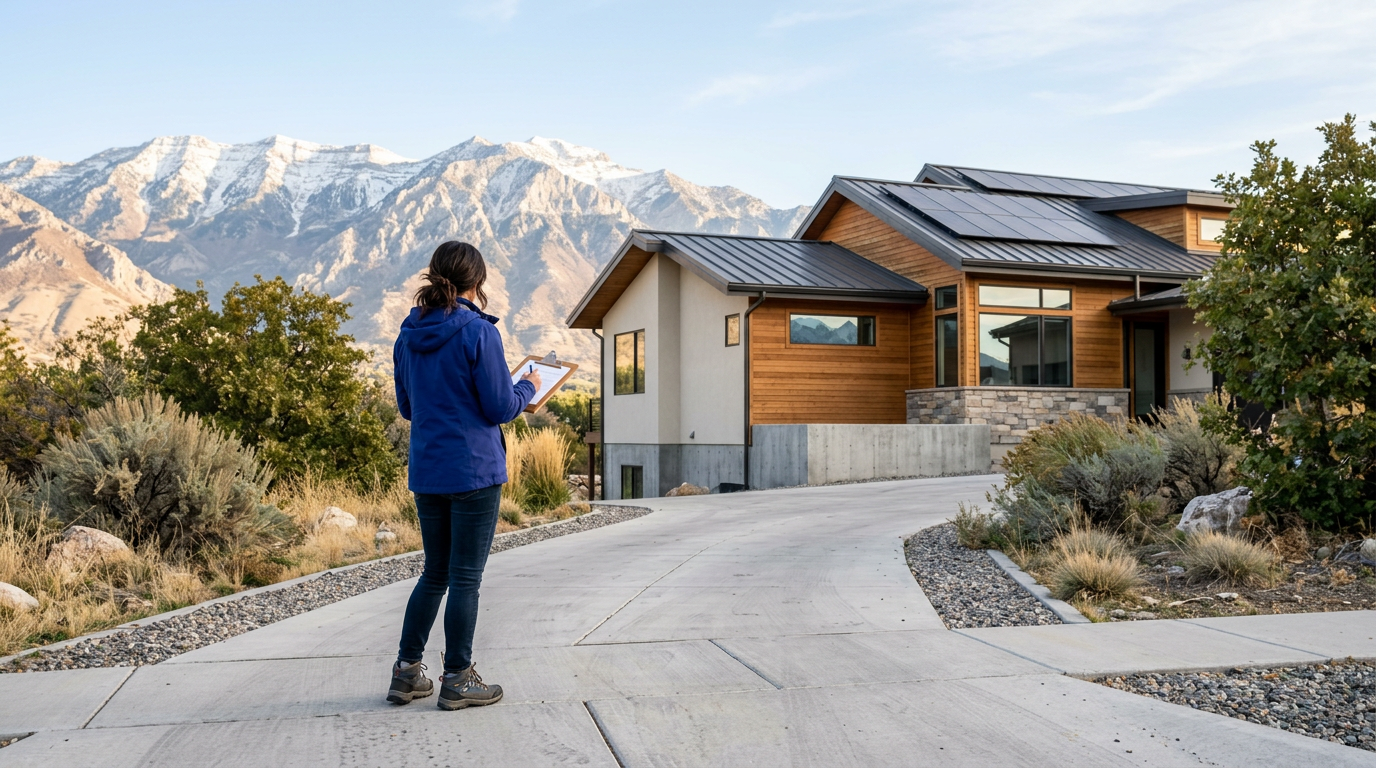
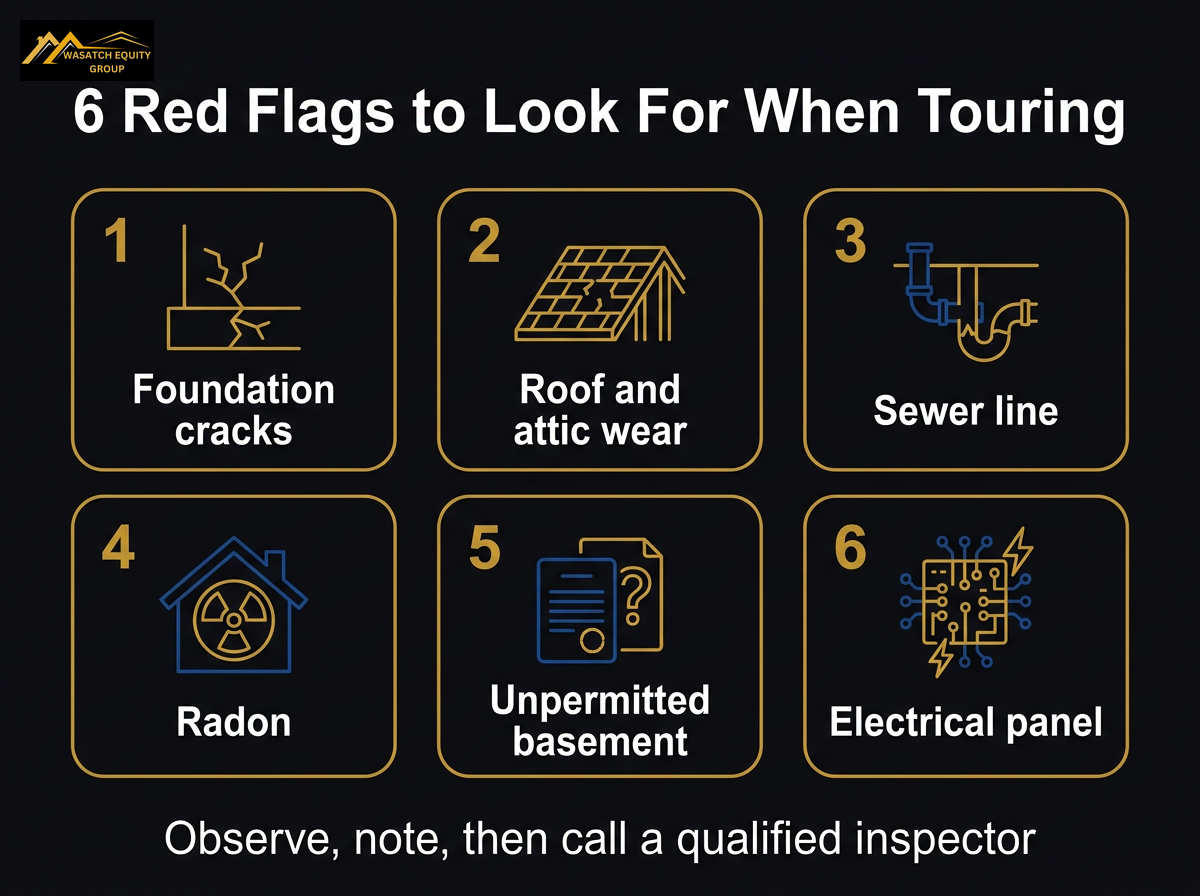
The most important red flags in a Utah home are foundation movement on expansive clay or near the Wasatch Fault, roof and attic problems that cause ice damming, an aging sewer line (especially Orangeburg pipe), elevated radon, unpermitted basement work, and electrical sub-panels added without a permit. A walkthrough can spot some of these. An inspection and a sewer scope confirm the rest.
Fresh paint, staged furniture, and a fireplace in every room can make a house feel finished. Those details say very little about what is happening under the floors, behind the walls, or below the yard. Use this list on every tour, and bring it to your inspection.
1. Foundation Cracks and Expansive Clay Soils
Foundation problems are among the most expensive issues in any home. Along the Wasatch Front, the soil and the geology both matter.
- Stair-step cracks in brick or block masonry, diagonal cracks in drywall corners, and gaps around windows or trim can signal movement.
- Doors and windows that stick or no longer latch square may mean the structure has shifted.
- Hairline vertical cracks in poured concrete are often normal shrinkage. Cracks that are wide, growing, or offset deserve a closer look.
- Expansive clay soils swell when wet and shrink when dry. That movement can lift and drop slabs and footings over time.
- Grading and drainage: soil should slope away from the foundation. Look for pooled water, downspouts that dump next to the house, and sprinkler heads aimed at the walls.
Many Wasatch Front homes sit near the Wasatch fault zone. The Utah Geological Survey publishes resources on checking whether a property is near a fault and on geologic hazards for Utah homeowners. Those are worth reading before you make an offer. If you see significant cracking or movement, ask your inspector to recommend a structural engineer.
2. Roof Wear, Ice Damming, and Attic Insulation
Roofs are expensive to replace, and the attic often reveals problems the roof hides.
- Shingle condition: look for curled, cracked, or missing shingles, and granules collecting in gutters.
- Ice damming: in winter, heat leaking into the attic melts snow on the roof, and the water refreezes at the eaves. Icicles, staining on ceilings near exterior walls, and peeling paint along the eaves are common signs.
- Attic insulation: check depth and coverage, and look for condensation or dark staining on the underside of the roof sheathing.
- Bathroom fans that vent into the attic instead of outside add moisture and can speed up damage.
3. Sewer Lines and Orangeburg Pipe
A sewer line failure can mean a yard torn up for days and a repair bill in the thousands. Orangeburg pipe is one of the biggest concerns in older homes.
- Orangeburg is a bituminous fiber pipe used in many mid-century homes. Over time it can soften, crack, and collapse. Age is a clue, but only an inspection of the pipe itself can confirm what is there.
- Warning signs include slow drains across several fixtures, gurgling toilets, recurring backups, and soft or sunken spots in the lawn.
- Tree roots are a common cause of blockages and can push their way into older joints.
A standard home inspection usually does not include a sewer scope, which is a camera run through the line. Buyers often add one, especially on older homes. It shows roots, low spots, offsets, and pipe material.
4. Radon in Utah Basements
Radon is a colorless, odorless gas that comes from the natural breakdown of uranium in soil. It enters homes through foundation cracks, sump pits, and gaps around pipes. Radon cannot be detected by smell, so testing is the only way to know.
The Utah Department of Environmental Quality (DEQ) uses 4.0 picocuries per liter (pCi/L) as the level at which homeowners should contact a certified radon mitigation professional. That threshold is the EPA's action level.
- Test during your inspection period or ask the seller for any prior results. DEQ sells short-term test kits to homeowners.
- Retest after remodeling. Basement excavation and remodels can change radon levels, so a clean test years ago does not guarantee a clean result today.
- Mitigation is usually a fan and pipe system installed by a certified professional. Get quotes from certified mitigators before you assume the cost is high.
5. Unpermitted Basement Finishing
A finished basement can add square footage, a bedroom, or rental potential. It can also hide serious problems if the work was never permitted.
- Bedroom requirements include an egress window, proper ceiling height, and smoke and carbon monoxide alarms. A room without these may not count as a legal bedroom.
- Unpermitted work can require the buyer or seller to open walls or ceilings for inspection, and it can create insurance and resale questions.
- What to check: search the city's permit records for the address, and ask the seller for permits and final inspection sign-offs.
6. Electrical Sub-Panels and Old Wiring
Many basement remodels add a sub-panel to power new rooms. When that work is done without a permit or by someone unqualified, it can be a fire risk.
- Panel condition: look for scorched or discolored panels, breakers that feel warm, and double-tapped breakers.
- Labeling and clearance: circuits should be labeled and the panel should have clear working space in front of it.
- Wiring type: ask your inspector to identify older wiring types and the brand of any panel, since some older panel brands are known to have reliability concerns.
What to Do With What You Find
Every red flag is a question to ask, not automatically a reason to walk away. Many issues are repairable, and the cost of a repair can be negotiated. The inspection period in your purchase contract is the time to act on findings, so plan ahead. Review your inspection report with your agent, decide which items need an expert, and get repair or credit requests in on time.
Frequently Asked Questions
A standard home inspection identifies visible concerns and tells you where to look harder. If the inspector flags significant cracks, movement, or drainage problems, a licensed structural engineer or foundation specialist can evaluate the cause.
Home age is a clue, since Orangeburg was used in many mid-century homes. A sewer scope, a camera inspection of the line, is the reliable way to identify the pipe material and its condition.
Yes. Ask the seller for any prior radon results, or test during your inspection period. Retest after major basement remodeling, because renovations can change radon levels.
Check the city's permit records, ask the seller for permits and final inspections, and bring your agent in before your inspection contingency expires. Unpermitted work can affect how the space is valued, insured, and used, including whether a room counts as a legal bedroom.
Walk Every Tour With a Plan
Get the WEG Buyer Due Diligence Walkthrough Checklist, or book a buyer consultation to review a specific property before you make an offer.
Download the Checklist Book a Buyer ConsultationJustin Montoya is a licensed Utah real estate sales agent (License #13587465-SA00) affiliated with Kelly Right Real Estate, and a Mortgage Loan Originator (NMLS #266932) sponsored by Loan Factory, Inc. (NMLS #320841). This article is general information only. It is not legal, engineering, or home inspection advice. Consult a licensed home inspector, structural engineer, or attorney about your specific property. Equal Housing Opportunity.